Outdoor Kitchen Design Ideas for Modern Homes
The allure of an outdoor kitchen cannot be denied. Imagine the tantalizing aroma of grilled delights wafting through the air, the gentle chirping of crickets as your backdrop, and the camaraderie of friends and family around a fire. An outdoor kitchen does more than just offer a cooking space – it brings your entire home life outdoors, blurring the boundaries between inside and out. Today, we’ll be diving into some innovative “Outdoor Kitchen Design Ideas” that cater to various aesthetics and functionalities. Whether you’re aiming for rustic vibes or a luxury oasis, we’ve got you covered.
Modern homes require more than just functional designs; they demand sustainability, luxury, and innovation. Integrating the right materials, appliances, and themes can convert a simple backyard into an extraordinary cooking and dining paradise. This article will discuss these concepts in-depth, including the essential considerations you need to keep in mind to ensure longevity and aesthetics.
Modern Outdoor Kitchen Ideas
Outdoor kitchens have evolved from simple grill setups to elaborate spaces that resonate with the overall aesthetics of contemporary homes. When we talk about modern outdoor kitchen design ideas, the emphasis is on functionality, sleekness, and innovation.
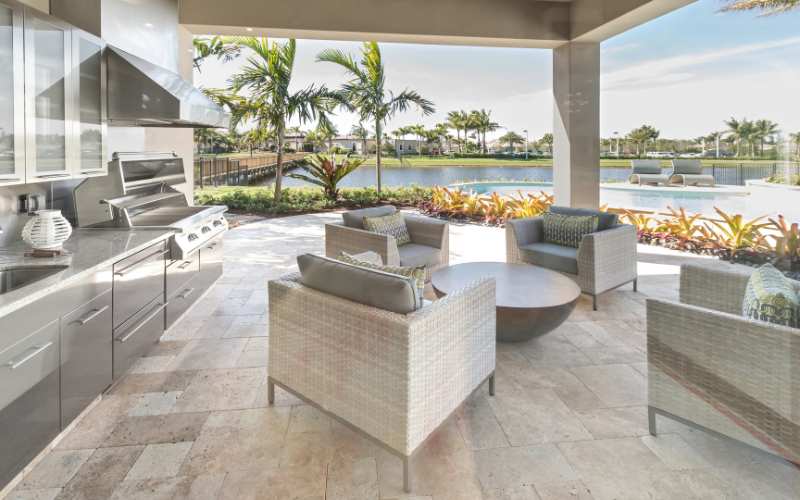
- Countertops: Modernity champions sleekness. Consider using polished concrete or quartz for countertops. Not only are these materials robust against weather elements, but they also exude a sense of refined taste.
- Appliances: The modern touch is best encapsulated with stainless steel appliances. Whether it’s a grill, refrigerator, or oven, the reflective surface of stainless steel blends perfectly with contemporary designs while ensuring durability.
- Flooring: Think of geometric patterns or monochrome schemes. Large ceramic tiles in shades of grey or even matte-finished concrete can underline a modern aesthetic.
- Cabinetry: Go for minimalist, handleless cabinets. Modern designs often avoid ornate details in favor of subtle sophistication.
- Island Concepts: Modern kitchens often feature islands as central points. These can be equipped with sinks, stovetops, or prep areas, facilitating multitasking and enhancing kitchen dynamics.
Rustic Concepts
A rustic outdoor kitchen brings forth visions of countryside charm, harkening back to simpler times while not compromising on functionality.
- Materials: Raw and natural should be your mantra. Wood, especially reclaimed or aged types, and stone play pivotal roles in achieving the rustic look. For countertops, consider rough-cut natural stones.
- Appliances: While you can use modern appliances, encasing them in wooden or stone structures can maintain the rustic feel. A stone oven or a classic wood-fired pizza oven can be both functional and thematic.
- Lighting: Opt for lantern-style lighting or even candles. These sources create a soft, warm ambiance that enhances the rustic mood.
- Furniture: Wooden furniture, preferably untreated or in natural tones, is the go-to choice. Think about wooden benches or even log stools to further the countryside appeal.
Budget-Friendly Tips
Designing an outdoor kitchen needn’t burn a hole in your pocket. With a bit of ingenuity, you can have a functional and aesthetic space without the hefty price tag.
- Recycled Materials: There’s a certain charm in repurposing. Old wood, previously used countertops, or even reclaimed bricks can be turned into essential parts of your kitchen.
- DIY Furniture: Instead of buying expensive outdoor furniture, consider creating your own. Pallet furniture, for instance, is a trend that’s both economical and stylish.
- Appliance Choices: While gas grills are convenient, charcoal ones are generally cheaper. Also, prioritize. Do you really need a wine cooler or would a simple icebox suffice?
- Plant Decor: Instead of splurging on decorative items, use plants. They’re often cheaper and add a touch of natural vibrancy to the space.
Luxury Cooking Spaces
A luxurious outdoor kitchen goes beyond functionality; it’s about creating an experience, a space that radiates opulence and sophistication.
- High-End Appliances: Consider brands known for their luxe factor. Wine coolers, kegerators, and top-of-the-line grills can make your kitchen stand out.
- Materials: Luxury is often in the details. Marble or granite countertops, teak wood furniture, and even gold or copper accents can elevate the overall look.
- Lighting: Go for mood lighting options that can be adjusted as per the occasion. Also, consider chandeliers or pendant lights made of premium materials.
- Extra Features: Think about adding features like a bar area, a sound system, or even a mini theater setup. Luxury is about offering more than what’s expected.
BBQ Design Inspirations
Barbecuing is an art, and the space where it’s practiced should reflect that passion and expertise.
- Grill Choices: The heart of a BBQ kitchen. Decide between charcoal for its smoky aroma or gas for convenience. Today, there are hybrid grills available that offer the best of both worlds.
- Storage Solutions: Having dedicated spaces for charcoals, wood chips, sauces, and utensils can make the BBQ process smooth and efficient.
- Island Configuration: A BBQ island can act as a focal point. Equip it with a grill, storage spaces, and perhaps a prep area. Overhead, consider a pergola with climbers for a touch of green and shade.
- Seating Arrangements: Bar stools around the grill area allow guests to interact with the chef. It’s social, interactive, and fun.
By combining functionality, aesthetics, and personal preferences, you can create an outdoor kitchen that is not just a cooking area but a space where memories are made, stories are shared, and culinary delights are savored.
Patio Kitchen Layout Ideas
Creating an outdoor kitchen on your patio involves intricate planning to optimize space and aesthetics. Here are comprehensive insights into conceptualizing the perfect patio kitchen layout:
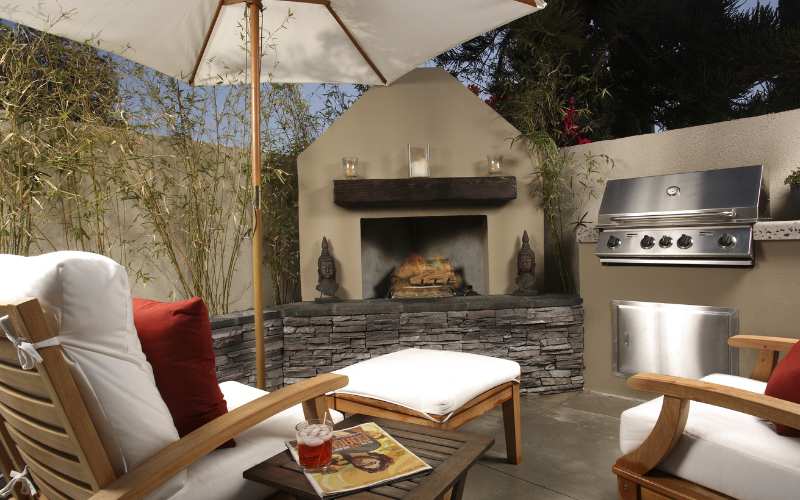
- Zoning: Like an indoor kitchen, your outdoor space should have clear zones. These typically include:
- Preparation Zone: Featuring countertops, a sink, and perhaps a smaller refrigerator for ingredients.
- Cooking Zone: This is where the grill, stovetop, and pizza oven would be.
- Dining Zone: A place for a table, chairs, or even bar stools.
- Storage Zone: Cabinets, shelving, or even a standalone storage unit for utensils, plates, and BBQ equipment.
- Traffic Flow: Ensure that there’s ample space for people to move about. You wouldn’t want guests bumping into your BBQ while they navigate the space. A minimum of 3 feet between furniture and appliances usually suffices.
- Connection to the Indoor Kitchen: If you’re going to be shuttling dishes or ingredients from the indoor to the outdoor kitchen, ensure easy access. This might involve positioning the outdoor kitchen close to the house or even adding sliding doors to facilitate movement.
Lighting Solutions
Lighting isn’t just functional; it sets the mood. Here’s how to perfectly light up your outdoor kitchen:
- Task Lighting: Essential for areas where you prep or cook. LED spotlights under cabinetry or above grills ensure you’re not chopping veggies or grilling in the dark.
- Ambient Lighting: This creates the atmosphere. Think string lights, lanterns, or even LED strips that can change color to match the mood or occasion.
- Safety Lighting: Essential for paths, steps, or any other areas where guests might trip. Solar-powered stake lights or even low-voltage lighting can be both practical and atmospheric.
- Accent Lighting: Want to highlight a particular tree, sculpture, or even the poolside? Accent lights, like uplights, can direct attention where you want it.
Furniture Ideas
Outdoor furniture should combine aesthetics, comfort, and durability. Here’s what to consider:
- Material Choices: Materials like teak, wrought iron, or all-weather wicker are not only durable but also resist weather damage.
- Seating Options:
- Sofas and Chairs: Perfect for relaxed, conversational setups.
- Bar Stools: Ideal around an island or a bar.
- Benches: Can be space-saving and offer a rustic touch.
- Storage Furniture: Think benches that open up to store cushions or tables with compartments for utensils.
- Weatherproofing: Whichever furniture you choose, ensure it’s weatherproofed or covered when not in use to prolong its life.
Stone Themes
Natural stone brings an earthy, enduring charm to outdoor kitchens. Here’s how to integrate it:
- Countertops: Materials like granite or slate don’t just look majestic but are also durable against the elements.
- Flooring: Flagstone, bluestone, or even travertine tiles can lend a luxurious feel underfoot.
- Walls and Backsplashes: A stone wall or backsplash behind the grill can be both functional (preventing stains) and aesthetically pleasing.
- Fireplaces or Firepits: Stone fireplaces become the centerpiece of an outdoor kitchen, offering warmth and an inviting ambiance.
Appliances Guide
Appliances are the heart of any kitchen. When choosing for the outdoors, consider the following:
- Weather Resistance: Ensure appliances are rated for outdoor use. Stainless steel is often preferred for its durability and resistance to rust.
- Grills: Decide between:
- Gas: For convenience.
- Charcoal: For that smoky flavor.
- Pellet: A mix of convenience and flavor.
- Refrigeration: Outdoor-rated refrigerators are essential to keep ingredients fresh. Also, consider beverage coolers for drinks.
- Ovens and Stovetops: Beyond grills, having a dedicated stovetop can be useful. Also, pizza ovens (wood-fired or gas) can elevate your outdoor cooking game.
- Other Appliances: Think about ice makers, dishwashers rated for outdoor use, or even kegerators for draft beer enthusiasts.
Choosing the right layout, lighting, furniture, stones, and appliances for your outdoor kitchen is a fusion of personal preference, functionality, and aesthetics. With the right choices, your outdoor kitchen can be as inviting, efficient, and enjoyable as its indoor counterpart.
Pizza Oven Designs
Pizza ovens have transformed from mere cooking instruments to focal points in modern outdoor kitchens. Their design, coupled with the magic of wood-fired cooking, offers a unique ambiance. Here’s a deep dive into the world of outdoor pizza oven designs:
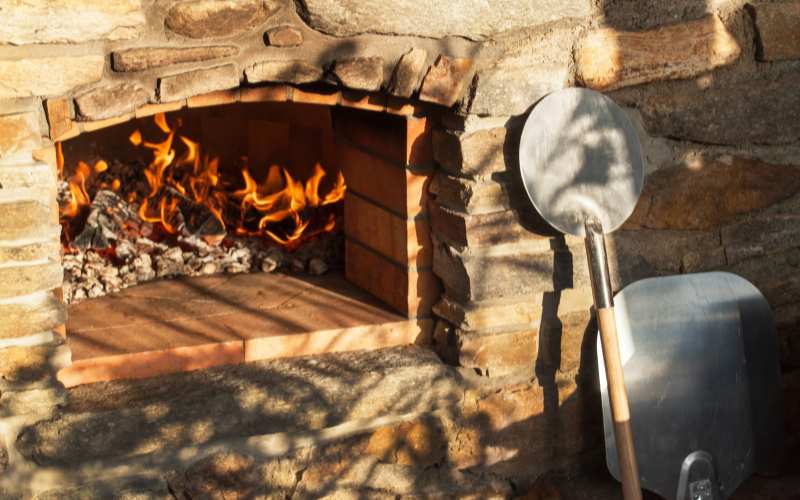
- Traditional Brick Ovens: This is the classical choice, rooted in Italian culture. The brick construction not only offers an authentic look but also retains heat superbly, ensuring perfectly cooked crusts.
- Stainless Steel Ovens: For a modern touch, stainless steel pizza ovens are sleek and resistant to the elements. They often heat up faster than brick, but might not retain heat as long.
- Portable Designs: Ideal for those who enjoy mobility, portable pizza ovens are often gas-powered, lightweight, and perfect for small gatherings or family picnics.
- Built-in Ovens: These are integrated into the overall outdoor kitchen design. While they’re stationary, they allow for a seamless design flow in the cooking area.
- Custom Artisan Ovens: For those looking for a unique touch, custom designs with decorative tiles, or even mosaics, can be created to serve as a conversation starter.
Grill Setup Ideas
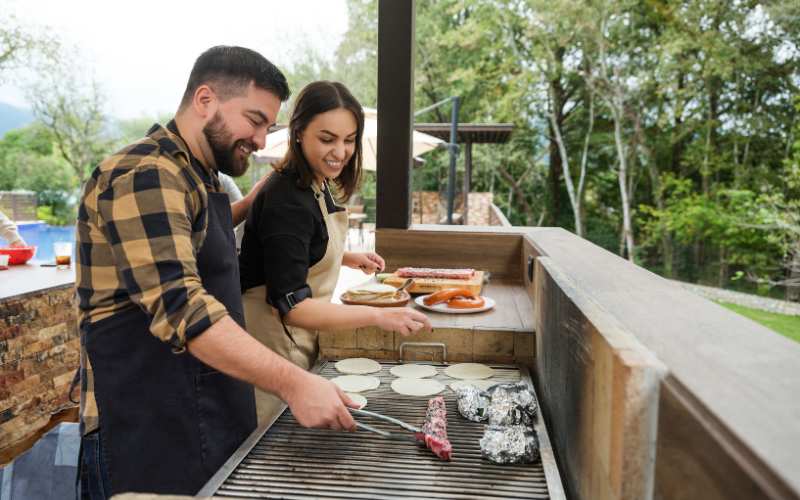
The grill, for many, is the cornerstone of the outdoor kitchen. Let’s explore various grill setup concepts
 :
:
- Built-in Grills: Integrated into countertops or islands, these grills provide a streamlined appearance. They often come with additional storage beneath for utensils and grilling accessories.
- Freestanding Grills: These are the classic, portable options. Modern designs now offer more than just grilling capabilities – think rotisseries, side burners, and even smoker boxes.
- Charcoal vs. Gas: While gas grills offer convenience and quick heating, charcoal grills impart a smoky flavor that many BBQ enthusiasts crave. Some grills even offer hybrid functionalities.
- Kamado Grills: These ceramic grills, often recognized by brands like Big Green Egg, offer incredible heat retention and versatility from grilling to smoking.
- Grill Islands: For those looking to create a centralized cooking hub, grill islands offer integrated preparation spaces, storage, and sometimes even refrigeration or sinks.
Small Solutions
Limited space doesn’t mean compromising on style or functionality. Here are solutions tailored for smaller areas:
- Modular Kitchens: These allow you to pick and choose components based on your space and needs. They can be reconfigured or expanded in the future.
- Foldable Furniture: Opt for seating or tables that can be folded and stored away when not in use. This ensures the area remains uncluttered.
- Vertical Storage: Use walls or tall storage units to maximize storage space vertically. Think hanging racks for utensils or wall-mounted spice racks.
- Rolling Carts: These can serve as mobile prep stations, storage, or even portable bars. They can be wheeled out during use and stored away later.
Rooftop Ideas
Transforming a rooftop into a culinary paradise offers city dwellers a private escape. Here’s how:
- Weight Considerations: Before setting up, ensure your rooftop can handle the weight. Lightweight furniture and grills are preferable.
- Greenery: Incorporate planters or even vertical gardens to introduce greenery. This not only enhances aesthetics but can also serve as a source of fresh herbs.
- Windbreakers: Rooftops can be windy. Consider retractable windbreakers or even glass partitions to shield the dining and cooking areas.
- Shade Solutions: Pergolas or retractable awnings can protect against the sun while offering a cozy atmosphere.
Poolside Concepts
Marrying a pool with an outdoor kitchen can be the ultimate backyard luxury. Here’s how:
- Seamless Integration: Ensure the design flow is consistent. For instance, if your pool has stone detailing, consider using the same or complementary stone in the kitchen area.
- Wet Bars: Incorporate a bar with underwater bar stools. This allows guests to enjoy a drink without leaving the pool.
- Safety First: Ensure electrical appliances are appropriately distanced from the pool. Also, consider non-slip flooring materials to prevent accidents.
- Shade and Shelter: Cabanas or poolside pergolas can offer shade for those wanting to take a break from swimming but still remain outdoors.
With the right planning, any outdoor space, irrespective of its size or location, can be transformed into a gourmet’s delight. From compact rooftops to expansive poolside setups, the potential is boundless.
Bar and Kitchen Combos
Merging the comfort of a bar with the practicality of a kitchen is a trend that’s seeing significant growth. The experience is beyond just dining; it’s about entertainment, camaraderie, and ambiance.
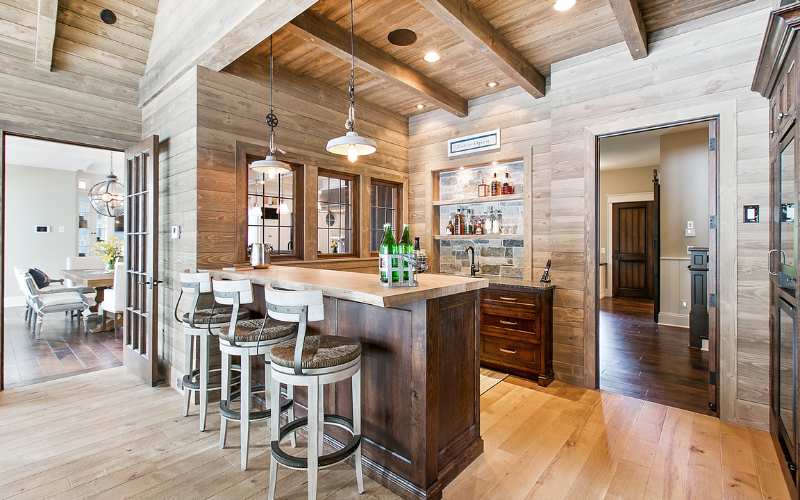
- Integrated Design: A well-integrated bar and kitchen combo considers fluidity. This means a cohesive countertop material from kitchen prep areas to bar serving zones and matching bar stools with dining chairs.
- Zoned Yet Open: While the cooking and prepping area should be distinct from the bar, maintaining openness facilitates interaction. Guests can sip their drinks while watching a meal being prepared.
- Bar Essentials: Beyond just a wine rack or cooler, think about built-in ice makers, pull-out cutting boards for lime and lemon wedges, and storage for a range of glassware – from wine glasses to highball glasses.
- Practicalities: With drinks come spills. Opt for non-porous countertop materials like quartz which are easier to clean and more resistant to stain.
- Ambient Lighting: Overhead pendant lights for the bar area and under-cabinet lighting for the kitchen can set the perfect mood.
Fireplace
The inclusion of a fireplace in an outdoor kitchen design is less about necessity and more about ambiance. It brings warmth, both literally and figuratively.
- Central Attraction: A fireplace can be the central feature. Positioned so, it becomes a focal point around which seating and dining areas revolve.
- Materials Matter: Stone fireplaces, whether rustic or polished, have a timeless appeal. For a sleeker look, consider using metals or even concrete.
- Safety First: Position the fireplace at a safe distance from the main cooking area. Also, ensure there’s adequate ventilation, especially if the fireplace is under a covered area.
- Dual Purpose: Think about fireplaces that double up as pizza ovens or incorporate a grill. This is a functional design at its best.
Sustainable Designs
Green, sustainable designs are not mere buzzwords; they represent a responsibility towards the environment.
- Material Choices: Opt for sustainably sourced wood or recycled materials for cabinetry and decking. Locally sourced stone or concrete can reduce the carbon footprint associated with transportation.
- Energy Efficiency: Appliances, even for outdoor spaces, come with energy ratings. Choose those that consume less power and are more efficient.
- Waste Management: Incorporate composting units or segregated waste bins for recyclables and non-recyclables.
- Water Conservation: Install low-flow faucets and consider rainwater harvesting systems for any outdoor sink or cleaning area.
Compact Cooking Spaces
A small space doesn’t mean you have to skimp on functionality or style. Compact cooking spaces can be just as effective.
- Vertical Integration: Maximize vertical space. Use wall-mounted storage units, magnetic knife strips, and hanging pot racks.
- Multifunctional Appliances: Appliances that perform multiple functions, like a grill-cum-oven or a cooker with a built-in griddle, save space.
- Foldable Features: Foldable countertops or drop-down tables can provide prep space when needed and can be folded away after use.
Storage Solutions
An effective outdoor kitchen requires smart storage solutions. Not only does this reduce clutter, but it also improves functionality.
- Weatherproof Cabinets: Materials like stainless steel or marine-grade polymer resist the effects of weather, ensuring longevity.
- Pull-out Drawers: Instead of deep cabinets, pull-out drawers provide easier access to stored items. This is especially useful for heavy pots and pans.
- Hidden Bins: Integrated trash and recycling bins ensure waste disposal without compromising aesthetics.
- Overhead Storage: For items used less frequently, overhead storage units or even open shelves can be incorporated.
With the right design principles, even the most compact or unique spaces can be transformed into efficient, aesthetic outdoor kitchens. It’s all about optimizing what you have, being conscious of the environment, and prioritizing functionality alongside beauty.
Dining Area Inspirations
The dining area in an outdoor kitchen can easily become the heart of any gathering. It’s where food is savored, stories are shared, and memories are made.
- Natural Elements: To bring in a serene and calming touch, consider integrating natural elements. A wooden dining table surrounded by lush greenery or a water feature can create a sanctuary-like feel. Pairing wooden furniture with soft, muted cushions can bring an elegant touch to your outdoor space.
- Pergola Magic: Installing a pergola can change the entire dynamics of your dining area. It not only offers shade but, when adorned with fairy lights or vines, becomes an enchanting space.
- Mix and Match: Don’t be afraid to mix different seating options. Bench seating on one side and individual chairs on another can add a dynamic touch to your dining area. Add bar stools around a kitchen island for additional seating.
- Centerpiece Charm: Elevate your dining experience by adding a unique centerpiece. This could be a floral arrangement, an antique lantern, or even a bowl of fresh fruits.
- Views Matter: If your property allows, position your dining area to take advantage of views. Overlooking a garden, a pool, or a scenic backdrop can immensely enhance dining.
Roofing Ideas
When considering roofing for an outdoor kitchen, one must factor in protection from elements, aesthetic appeal, and ventilation.
- Retractable Awnings: These are ideal for areas where weather conditions are unpredictable. You can enjoy the sun on clear days and have protection during rains.
- Natural Thatch: For a tropical or beachy feel, thatched roofs made from palm leaves or reeds are perfect. They offer shade and are also environmentally friendly.
- Skylights: Consider incorporating skylights in solid roofs. They provide natural light during the day and a view of the stars at night.
- Green Roofs: A sustainable and visually appealing option, green roofs are covered with vegetation. They act as insulation and are excellent for rainwater absorption.
- Traditional Tiled Roof: For those preferring a classic look, a tiled roof can be both functional and stylish. Choose from clay, slate, or concrete tiles based on your preference and climate.
Green Concepts
Embracing green concepts in your outdoor kitchen design not only benefits the environment but can also provide a healthier space for your family.
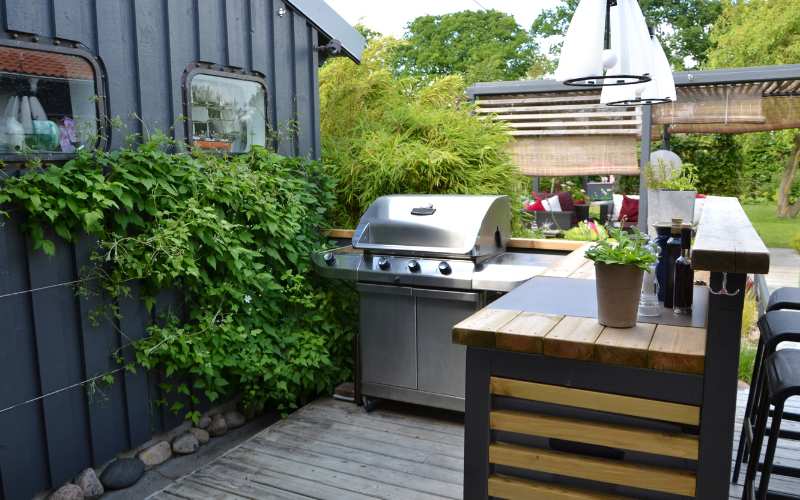
- Solar Power: Install solar panels to power your outdoor lighting or appliances. It reduces the energy footprint and can be cost-effective in the long run.
- Edible Gardens: Incorporate planters or garden beds with herbs, vegetables, or fruits. It ensures fresh, organic produce right at your fingertips.
- Water Conservation: Install a greywater system for your sink. This reclaimed water can then be used to irrigate plants or clean the floors.
- Eco-friendly Materials: Choose sustainable materials for countertops, cabinetry, and flooring. Bamboo, for instance, is a renewable resource and has a chic appeal.
Flooring Options
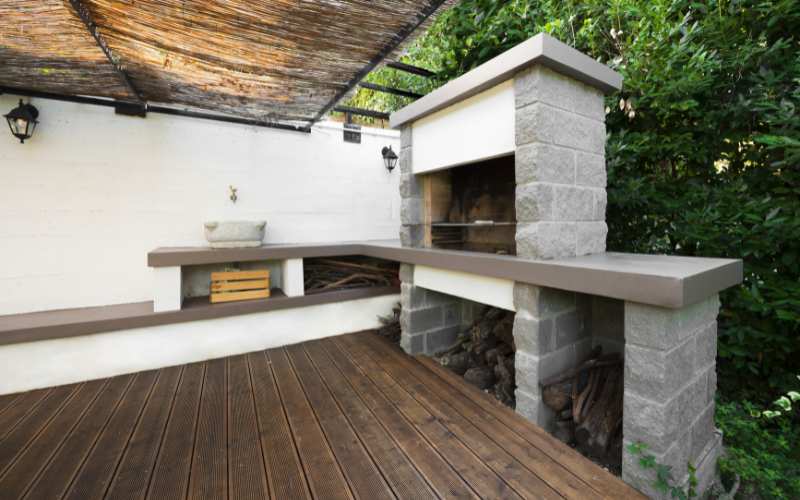
The right flooring can elevate the look of your outdoor kitchen while ensuring safety and durability
 .
.
- Stone: Natural stone like slate, limestone, or travertine offers a rustic charm. They’re durable and can handle varying weather conditions.
- Concrete: It’s versatile and can be stained or stamped to achieve various looks. It’s also easy to maintain and provides a sleek, modern appearance.
- Decking: Wooden decks give warmth to an outdoor space. Choose woods like cedar, redwood, or teak that stand well against the elements.
- Tile: Porcelain or ceramic tiles come in myriad designs. They’re easy to clean and can emulate the look of natural stone or wood.
Winter-Proof Ideas
Cold weather shouldn’t deter you from enjoying your outdoor kitchen. Here’s how you can make it winter-ready.
- Heated Flooring: Radiant floor heating systems can make it comfortable to walk, even when temperatures drop.
- Wind Barriers: Consider retractable glass walls or screens. They block the cold winds without compromising the view.
- Warm Lighting: Soft, yellow lighting can create a cozy and warm ambiance.
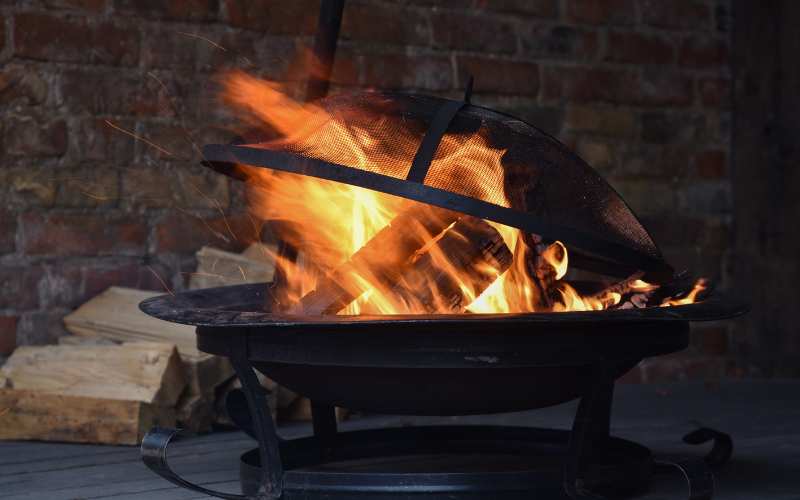
- Fire Pits and Heaters: Portable or built-in, they’re essential to warm up the space. Ensure they’re safely positioned away from flammable materials.
- Weatherproof Furnishings: Choose furniture that’s designed to withstand cold and moisture. Add plush cushions and throws for added warmth.
Remember, creating an outdoor kitchen is not just about aesthetics; it’s about crafting an experience. With the right design and features, it can become a haven you cherish throughout the year, regardless of the season.
Conclusion
Outdoor kitchens have transcended from mere cooking spaces to experiential zones where families and friends congregate to create and share memories. As modern homes continue to blend the indoors with the outdoors, the design and functionality of these spaces have never been more paramount. From selecting the right materials that endure varying weather conditions to ensuring the space is both sustainable and stylish, there’s a myriad of elements to consider. Dining under the stars, enjoying the warmth of a fireplace in winter, or simply indulging in the serenity of greenery, the possibilities are endless. However, the true essence of an outdoor kitchen lies not in its luxury or vastness but in its ability to bring people together in an ambiance that feels intimate, warm, and inherently human. In a rapidly digitizing world, such spaces are a gentle reminder of the simple joys of life. So, whether it’s a grand rooftop kitchen or a compact patio setup, let it reflect your personality, values, and, above all, your love for the great outdoors.